, Manufacturing Technology Blog

Things Looking Good for the New Scrap-Metal Plant in Riverton

RIVERTON – A new scrap-metal recycling plant has started processing test samples and plans to ramp up its production capacity in the coming months.

S.I.C. Recycling Inc., a subsidiary of Assumption-based Sloan Implement Co., started the plant just south of Interstate 72 earlier this year. The project got funding of more than $900,000 in financial incentives from the state.
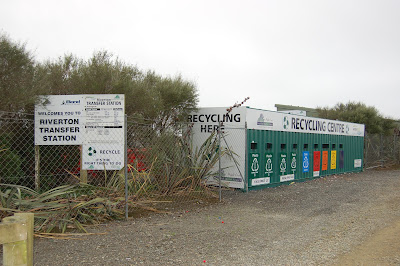
Scrap Metal Recycling Plant in Riverton
“Things have been going great,” general manager Brady Bird said. “We haven’t had any significant hiccups.”

The plant will eventually process scrap metals which don’t contain iron, such as copper-aluminum radiators and copper wiring, and may expand to other items including old computers and other electronic waste, Bird said.

“The typical process is to run a couple loads to get an understanding for how the machinery’s working, and then you make some tweaks,” Bird said.

S.I.C. already has hired office workers, manufacturing personnel, a maintenance supervisor and “a handful of operators,” he said.

While S.I.C. isn’t hiring at present, the company always accepts applications and anticipates more openings in the coming few months.

According to officials, they expect the operation to generate 25 new jobs, but Bird said the final number will depend on several economic factors.

“It’s all based on what’s going on in the scrap industry and the commodity market,” Bird said. “If construction picks back up and the market is hot, then we’ve got significantly more volume coming through than we would otherwise.”

As per Village President Bob Todd, the new business will be a boon for Riverton.

“We’re excited and ready to get them going,” Todd said.

Besides generating jobs and property tax revenue, local officials hope S.I.C. will also result in business growth around the I-72 interchange at Overpass Road, he said. That area was annexed as part of the process of bringing S.I.C. to town.

A full-service truck stop or a motel will be good fit for the area, Todd said.

The plant also may lead to lower electricity bills for residents.

The village’s peak demand for energy is currently at night, meaning customers pay more for the power they use when they get home from work, Todd said.

Once the plant reaches its full capacity, the amount of energy it uses should shift peak demand – and the accompanying higher rates – to the daytime hours, he said.

Novel Casting Process Could Change the Way Complex Metal Parts Are Made

A Georgia Tech research team has developed a novel technology which could transform how industry designs and casts complex, expensive metal parts. This new casting technique makes possible faster prototype development times, as well as more efficient and cost-effective manufacturing processes after a part moves to mass production.

Suman Das, a professor in the George W. Woodruff School of Mechanical Engineering, has developed an all-digital approach which allows a part to be created directly from its computer-aided design (CAD). The project, sponsored by the Defense Advanced Research Projects Agency (DARPA), has received $4.65 million in funding.
Suman Das (Professor in Georgia Tech's School of Mechanical Engineering)
Suman Das displays a ceramic mold produced directly from digital designs using large area maskless photopolymerization (LAMP) technology. In his right hand, he holds a single-crystal superalloy turbine airfoil which was cast using a ceramic mold of the kind he holds in his left hand. 
"We have developed a proof-of-concept system that is already turning out complex metal parts, and which fundamentally transforms the way that very high-value castings are made," said Das, who directs the Direct Digital Manufacturing Laboratory in Georgia Tech's Manufacturing Research Center (MaRC). "We're confident that our approach can reduce costs by at least 25 % and reduce the number of unusable waste parts by more than 90 %, while eliminating 100 % of the tooling."

The approach being used by Das and his team focuses on a technique called investment casting, also known as lost-wax casting. In this method, which dates back thousands of years, molten metal is poured into an expendable ceramic mold to form a part.

The mold is made by creating a wax replica of the part to be cast, surrounding or "investing" the replica with a ceramic slurry, and then drying the slurry and hardening it to form the mold. The wax is then melted out – or lost – to produce a mold cavity into which metal can be poured and solidified to create the casting.

Investment casting method is used to design precision parts across a wide range of industries including aerospace, energy, biomedical and electronics. Das's current efforts are focused on parts used in aircraft engines. He is working with turbine-engine airfoils – complex parts used in jet engines – in collaboration with the University of Michigan and PCC Airfoils.

Today, Das explained, majority of the precision metal castings are designed on computers, using computer-aided design software. But the next step – creating the ceramic mold with which the part is cast – presently involves a sequence of 6 major operations requiring expensive precision-machined dies and hundreds of tooling pieces.

"The result is a costly process which normally produces many defective molds and waste parts before a useable prototype is achieved," Das said. "This trial-and-error development phase often requires severl months to cast a part that is accurate enough to enter the next stage, which involves testing and evaluation."

By contrast, Das's approach involves a device that builds ceramic molds directly from a CAD design, completing the task much faster and producing far fewer unusable parts. Called Large Area Maskless Photopolymerization (LAMP), this high-resolution digital process accretes the mold layer by layer by projecting bitmaps of ultraviolet light onto a mixture of photosensitive resin and ceramic particles, and then selectively curing the mixture to a solid.

The technique places one 100-micron layer on top of another until the structure is complete. After the mold is formed, the cured resin is removed through binder burnout and the remaining ceramic is sintered in a furnace. The result is a fully ceramic structure into which molten metal – such as nickel-based super alloys or titanium-based alloys – are poured, forming a highly accurate casting.

"The LAMP process reduces the time required to turn a CAD design into a test-worthy part from a year to about a week," Das said. "We eliminate the scrap and the tooling, and each digitally manufactured mold is identical to the others."
Novel Casting Process Pieces
A prototype LAMP alpha machine is at present building six typical turbine-engine airfoil molds in six hours. Das predicts that a larger beta machine – currently in construction at Georgia Tech and scheduled for installation at a PCC Airfoils facility in Ohio in 2012 – will produce 100 molds at a time in about 24 hours.

Though the present work focuses on turbine-engine airfoils, Das believes the LAMP technique will be effective in the production of several types of intricate metal parts. He envisions a scenario in which companies could send out part designs to digital foundries and receive test castings within a smaller period, much as integrated-circuit designers send CAD plans to chip foundries today.

Moreover, he said, direct digital manufacturing enabled by LAMP should allow designers to  produce increasingly sophisticated pieces capable of achieving greater efficiency in jet engines and other systems.

"This process can produce parts of a complexity which designers could only dream of before," he said. "The digital technique takes advantage of high-resolution optics and precision motion systems to achieve extremely sharp, small features – on the order of 100 microns."

Das also noted that the new process not only creates testable prototypes but could also be used in the actual manufacturing procedures. That would allow more rapid production of complex metal parts, in both low and high volumes, at lower costs in a wide range of industries.

"When you can produce desired volumes in a short period without tooling," he said, "you have gone beyond rapid prototyping to true rapid manufacturing."

Pittsburg State Organised Metal Casting Training

Pittsburg State University conducted its 12th annual Investment Casting Institute's Industry Certification Course.
Students in Pittsburg State University metal Casting Program
This year 30 people signed up for the training, coming from parts of the world.

Investment casting is used to produce precision parts for various of industries from auto manufacturing to orthopedic implants.

Today the students used the PSU foundry to pour molten metal into forms they create.

"This particular training is for people in industry, they are already process engineers, casting engineers, product development engineers, people who develop the particular process," says Russ Rosmait, the Director of the Investment Casting Training Center.

"Whatever we can pull from here, the actual practical approaches to making the castings and put that into simulations, that is what is going to help the customer out in the end," says participant Steve Sikorski.

PSU's metal casting certificate program is one of just 25 in the U.S. accredited by the Educational Foundation.